To help pinpoint lameness, veterinarians and farriers often use a hoof tester, a device that can be used to apply gentle pressure to any spot on the horse’s sole, toe, or heel area.
Great strides have been made in healing tendon injuries more quickly and with better outcomes in which scar tissue is minimized and properly aligned tendon fibers are encouraged. However, one important thing hasn’t changed: it still takes a long time for tendon tissue to mend.
Laminitis is an inflammatory condition that affects a horse’s hooves, and causes intense pain and tissue destruction that often result in the horse’s death. Preventive measures can be taken to offset the risk of laminitis occurrence.
Canker refers to an inflamed, ulcerated sore in the underside of a horse’s hoof. Though it can treated by removing infected tissue and applying various medications, it is hard to cure and has a tendency to recur.
Despite decades of research, laminitis remains a leading cause of death in horses. An anti-inflammatory drug discovered 40 years ago, but never used on large animals, may be the breakthrough that veterinarians and horse owners need.
In contrast to sporadic exertional rhabdomyolysis (classic tying-up), horses with RER are fit, actively in work, and show signs of muscle soreness after less than maximal exercise.
For decades, horse owners have struggled with management of chubby, cresty horses. Recent research offers an explanation that may absolve some of the guilt experienced by owners of foundered horses.
Corticosteroids are often used to treat the injured joints or tendons of racehorses because the anti-inflammatory action relieves pain and supports healing. Researchers looked at a large population of Thoroughbreds to determine corticosteroid use and risk of injury.
To find out whether young horses with OCD are as successful in their racing careers as unaffected horses, a study was conducted by researchers at the University of Illinois using more than 800 Standardbred yearlings.
A common diagnostic tool used to evaluate hind limb lameness is the flexion test. Researchers recently determine whether veterinarians were able to tell more about a horse’s lameness when leg flexion was held for either five seconds or 60 seconds.
Though a rider’s position or a change in the horse’s muscling can cause saddle slip, research conducted in England has shown that this problem is frequently a sign of hind leg lameness in horses.
Any horse can develop ringbone, but it is most common in horses that have been used in ways that expose the hooves and pastern joints to high levels of concussion or strain.
A common part of a lameness exam is a flexion test in which a horse’s leg is held in a tightly flexed position for a short period of time, after which the leg is straightened and the handler is asked to trot the horse immediately. Researchers analyzed the importance of flexion time in evaluating lameness.
You took your horse out for an easy trail ride on Monday and he seemed to be in good health. On Tuesday morning, he is desperately lame, unable to bear weight on one hoof and in obvious pain. What happened? A hoof abscess is a likely culprit for sudden and severe lameness.
How do I feed my injured event horse that's now on stall rest?
Though no longer a common injury, sweeney still occurs occasionally, usually caused by injury rather than ill-fitting equipment such as an improperly adjusted harness collar.
Pinpointing which leg a horse is favoring requires careful observation skills and a thorough understanding of horse movement.
Researchers determined the success rate for one technique used to treat osteochondritis dissecans (OCD) in young horses.
A database compiled by The Jockey Club indicated the incidence of fatal injuries in 2011 was lower when horses raced on synthetic track surfaces rather than dirt.
Hundreds of cutting horses were evaluated radiographically as youngsters and then again as older horses to determine the relationship of findings and competitive success.
Aquatic exercise programs have become popular for arthritis patients, both humans and other species. Being partially supported by water reduces the weight and mechanical stress borne by limbs and joints and provides other benefits.
Acupuncture treatments can be an effective pain-reduction tool for some horses with laminitis. Possibly by regulating nervous system function and interrupting pain signals, acupuncture also seems to enhance the effectiveness of other therapies and medications.
Signs of acute pain in horses—colic, obvious lameness—are familiar to most horse owners. However, your horse may be in mild discomfort, or even moderate pain, and show only subtle signs. How does an owner detect discomfort in her horse?
Guelph University in Ontario, Canada, has put together a website to educate horse owners about lameness.Veterinarians offer commentary about unsound horses shown in various video clips.
Because the horse derives power from its hindquarters, any problem involving the hocks has a good probability of being serious. Some conditions were seen more often in past eras when horses were driven more, though they can still be found in today’s equines.
Professionals at the Hoof Diagnostic and Rehabilitation Clinic evaluated the degree of lameness in 30 horses with laminitis using a force plate.
Collection of information for the Equine Injury Database was started over three years ago, and though many records have been collected, this process needs to continue for several more years before conclusions can be drawn.
The pain and inflammation of arthritis may be treated in many ways, though no treatment is completely effective in all cases. A new arthritis treatment is the use of blood-derived autologous conditioned serum.
A fractured coffin bone is a fairly common injury that might or might not jeopardize the horse’s performance career.
Because shape of the navicular bone border is hereditary, buyers of horses to be used for breeding might want to look for animals with straight or convex navicular border shapes.
Is my mature Warmblood mare receiving proper nutrition? Can I cure an OCD lesion in this mare through nutrition?
Quarter cracks are common hoof flaws in horses, especially racehorses and other equines in hard training and performance.
Horses are subject to muscle, ligament, and tendon injuries when they work hard, especially if they have not been properly conditioned for the work they are asked to do.
Horses can rapidly develop swelling or “filling” in one or more legs. Is it serious? What causes it?
Have there been any studies on the effect of nutrition and exercise programs on horses with "sticky stifles”?
According to a team of veterinarians, pasture turnout for horses affected by stress-related remodeling of the cannon bones can be a better treatment than stall rest.
Preliminary results from a study on flexural limb deformity and contracted foal syndrome showed that the deformities have a genetic component that is complex and poorly understood.
Many factors influence whether or not a particular horse will develop bone chips. These may include genetics, rapid growth, mineral imbalances, nutritional management, mechanical stress, trauma, overfeeding, endocrine problems, and accidental injury.
My 16-year-old American Saddlebred had an episode of laminitis a year ago. I want him to have more energy but not be out of control. What can I do?
Flexural deformities of the coffin joint sometimes require surgery to achieve normal heel length and hoof angle.
Tying-up is a baffling and sometimes frightening disease for horses and their caretakers. Signs range from a mere reluctance to move to severe colic and recumbency.
Concussion is the force sent vertically up the leg each time a horse’s hoof strikes the ground. Concussion is a major factor in lameness.
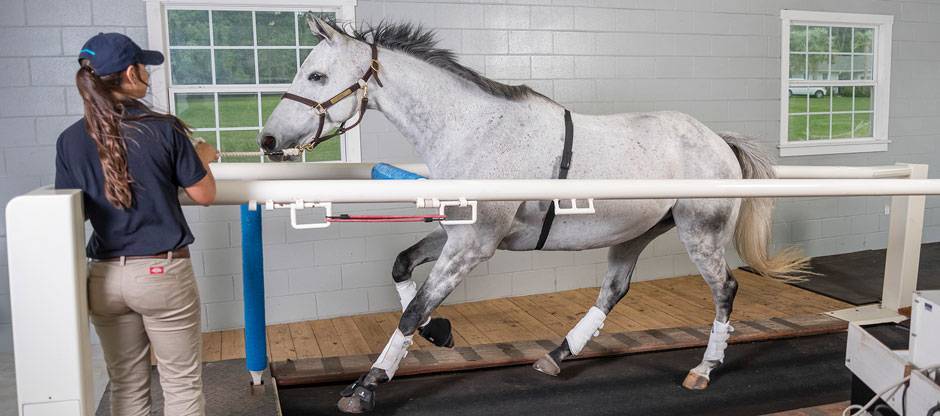
Because using an equine treadmill is a novel concept for most people, as well as a new experience for many of the horses themselves, the question of safety often arises.
As the horse flexes and extends the hind legs, forces applied to the sacroiliac joint can cause strains or tears in the ligaments as well as partial dislocation of bones. These injuries cause pain and stiffness.
When muscle atrophy occurs, the primary concerns to a horse owner are whether the muscle will regenerate and how to treat the horse to help it recover.
An examination of the horse's foot flight patterns shows what tends to happen with different conformations.
Researchers investigated the intra-articular production of a potent inflammatory compound following 90 days of oral supplementation with two different types of omega-3 fatty acids.
Outward signs of arthritis in horses are pain, heat, swelling, and reduced range of motion in a joint.
Conformation is a major factor in the physical soundness of a horse.
In order to provide correct care for the horse’s hooves, owners need to have an understanding of their construction.
Installing and maintaining the correct type of arena footing can be costly and time-consuming. However, getting and keeping the right material is essential for keeping your horse sound.
Biofilm is a term that has been used to describe a phenomenon found in slow-healing human wounds. The same concept has now been found in horses.
To minimize the risk of laminitis in any horse, implement some basic management steps.
Researchers examined the heritability of grass founder in an inbred herd of Welsh and Dartmoor ponies.
Researchers evaluated the hooves of several hundred feral horses in a range of environments from sandy deserts to cold alpine regions.
For horses with the right type of amputation, an artificial limb can allow many pain-free years in the pasture.
Keeping horses sound takes planning and attention to detail, but the result is worth the effort. Follow these tips to give your horse the best chance of avoiding lameness.
Tendon and ligament injuries are still regarded as serious, but new treatment and management options are allowing horses to recover more fully than they did 50 years ago.
Researchers found a correlation between gluteal pain and a hoof angle known as long toe/low heel.
Equine rehab clinics have a range of treatments to control discomfort, maintain or build muscular strength, and bring the horse back to health more quickly than in times past.
<p> I found a supplement that claims it can cure navicular and other bone diseases? Should I be skeptical?</p>
A research project underway at the University of Queensland in Australia is seeking knowledge about supporting-limb laminitis.
While pre-purchase veterinary exams are a good idea for any prospective horse owner, they are especially important when buying Thoroughbreds that have retired from a racing career.
Long periods of stall rest used to be part of the healing process after musculoskeletal injury or surgery. Newer advice is to put recovering horses back into light work at a much earlier point.
A veterinarian can tell a lot about a horse's neurologic condition simply by watching the horse move and interact with his environment.
A study of Standardbreds showed that about 6.4% of studied horses had a history of tying-up.
Changes in gene regulation preceded signs of pain or discomfort, development of vascular changes, separation of dermal-epidermal tissues, and inflammation in horses with laminitis.
To simplify the descriptions of lameness, the American Association of Equine Practitioners developed this numeric scale that covers any degree of unsoundness from mild to severe.
Though damaged cartilage doesn't regenerate on its own, there are techniques that can stimulate regrowth and repair.
Although regular intake of trace minerals is necessary for optimal health, their importance during recuperation from an injury should not be overlooked.
Osteochondritis dissecans (OCD) is a developmental orthopedic disease characterized by flaps, tears, and detached fragments in joint cartilage.
Double-check macromineral levels for horses that are experiencing injury-related rest.
Horses with equine bone fragility syndrome have a type of osteoporosis that is associated with inflammation of the lungs and lymph nodes caused by silicosis.
Common ingredients in oral joint supplements for horses are reviewed.
Review the mainstay ingredients in oral joint supplements and their effects on soundness.
A new product can help to keep horses from chewing leg bandages that protect wounds or surgical sites while they're healing.
Tying-up is a generic term commonly used to describe muscle disease in performance horses. Other terms often used interchangeably with tyingup include exertional rhabdomyolysis, azoturia, and Monday morning sickness.
The goal of the research project is to learn more about breed, age, gender, diet, exercise, and other factors that may be related to shivers.
Lameness is the classic sign of navicular syndrome. This can appear suddenly, but a more common pattern is mild lameness that becomes progressively worse over time.
New research has discovered that NSAIDs have the potential to inhibit bone healing in horses, especially in the early stages.
Training to race involves one of the most demanding equine exercise schedules.
<p> What feeding precautions should be observed after a horse founders?</p>
Ringbone is a skeletal change that affects a horse's lower limbs and can affect performance by causing lameness.
Wooden clogs made from plywood can help horses recover after bouts of acute laminitis.
Several equine neurologic diseases have been associated with vitamin E deficiency or improve with vitamin E supplementation.
Coffin bone fractures in young Warmblood horses are common, affecting the majority of horses on some farms.
Omega-3 fatty acids have direct anti-inflammatory actions that can be useful for the treatment of osteoarthritis and lameness.
Navicular syndrome (or navicular disease, or caudal heel pain syndrome) is a degenerative condition of structures in the horse's heel. The navicular bone lies at the back of the heel, and the deep digital flexor tendon runs down the leg and wraps under the navicular bone before anchoring to the coffin bone. Pain results from changes in the bones, bursa (fluid-filled joint structures designed to absorb shock and reduce friction), tendons, and ligaments in this area.
A survey conducted by American Farriers Journal turned up facts regarding the profession.
The decision on whether or not to shoe a horse is usually based on several criteria.
Equine nutritionists are frequently asked questions about dietary influences on hoof health.
Horses suffering from navicular pain may be helped by a medication that has been used to treat dogs. Etodolac is a non-steroidal anti-inflammatory drug (NSAID) that works by blocking the production of the prostaglandins that cause inflammation and pain.
Navicular disease, also known as palmar foot pain, is a frequent cause of lameness in older horses. A challenge for veterinarians is examining the structures within the hoof to determine the location and cause of pain.
Osteochondritis dissecans (OCD) is a developmental orthopedic disease that results in lameness in young horses.
Lameness and pre-purchase exams commonly include a flexion test of the forelegs.
A study in France looked at 401 foals from 3 breeds on 21 farms for the incidence of developmental orthopedic disease or osteochondrosis.
In order for cryotherapy to be effective, it must commence during the developmental stage. This is the time immediately after the horse has been placed at risk of developing laminitis but before signs such as lameness, bounding digital pulse, or hoof heat become apparent.
The developmental phase occurs during the first 20-60 hours after exposure to the causative agent or inciting event, be it overconsumption of carbohydrates, retained placenta, colic, metabolic derangements (Cushing's disease or equine metabolic syndrome), trauma, excessive weight bearing, ingestion of toxin, or medication intolerance (certain steroids).
Global use of the Obel scale to classify laminitis-induced lameness remains relevant in today's equine veterinary culture, according to researchers at the Royal Veterinary College, Hertforshire, UK.
<p> Are there other ways to put weight on my gelding without risking laminitis?</p>
Skeletal injuries are common when young Thoroughbred horses enter a program of race training. During the months of training leading up to, and between, actual racing starts, horses are subject to various problems related to accidental injury, overuse, fatigue, or inflammation.
Researchers looked for an association, if any, between the age of the dam and the foal's risk of fracture later in life, and also any correlation between birth order (dam's first foal or a later foal) and risk of fracture.
The condition is painful, often chronic, and sometimes fatal. Many horses never return to their previous levels of use after developing laminitis. Because of the seriousness of the disease, most owners would consider taking precautions to prevent laminitis in their horses if such management steps could be implemented.
Diagnosing arthritis in horses usually involves a history of the horse's workload, as complete as possible; a general physical examination; and a lameness evaluation. The athletic history of a horse often conveys significant information. Expect an in-depth probe by a veterinarian. Is the horse returning to training after a short or long break from exercise?
The choice of lead may be linked to biomechanical factors affecting ease of breathing (each complete gallop stride is accompanied by one inhalation and exhalation) or "handedness" (individual preference for one lead over the other).
Hyperbaric oxygen therapy, or HBOT, refers to a treatment in which a patient is placed in a sealed chamber and exposed to oxygen at several times normal atmospheric pressure. Oxygen is forced into the blood and other body fluids (lymph, cerebrospinal fluid, bone marrow), destroying bacteria and helping to heal injuries.
Investigation of factors that influence risk of lower limb injuries to Thoroughbreds training and racing in New Zealand.
This result indicates that laminitis flare-ups may be triggered by allergens and also by reactions to ingredients in common vaccines.
Veterinarians at the University of Pennsylvania's New Bolton Center have modified techniques for external fixation of equine compound fractures.
As the grass brightens from brown to green, the nutrient content of the plant changes considerably. Horses will undoubtedly relish the newfound forage, but care must be taken to allow only the amount of grazing time necessary to sustain optimal body weight. If horses are allowed unchecked access to spring grass, they can quickly become overweight. The perils of obesity include decreased stamina and a greater likelihood for unsoundness.
Dorsal displacement of the soft palate (DDSP) is a misalignment of tissues in the horse's throat. This condition, which is common in horses that work at high speeds, causes a drop in performance because affected horses are unable to breathe freely.
While obesity-associated laminitis is not well understood among researchers and veterinarians, affected horses may go on to lead otherwise healthy lives if treatment is swift and diligent. Recommended treatments center around corrective trimming and shoeing, use of nonsteroidal anti-inflammatory medications for pain, and strict diet. Forced exercise can be imposed once all laminitis-related pain has abated.
Developed for human use in breaking up kidney stones, the technique has been adopted by veterinarians to reduce pain and stimulate healing in some types of injuries. "Extracorporeal" refers to the fact that the treatment is given from outside the horse's body, in contrast to oral medications, injections, or surgery that are considered more invasive.
Because of the predisposition for sole abscesses and laminitis, strict attention must be paid to hoof care. Regular trimming or shoeing at four- to six-week intervals is imperative. All attempts to reduce the likelihood of laminitis should be implemented, including gradual changes in diet and limited exposure to carbohydrate-rich spring pastures. On the veterinary front, regular deworming is paramount.
<p> How can you stop wear and tear on your horses joints?</p>
Flat-footed horses are very sensitive to the type of footing on which they live and exercise. They are intolerant of exercise on rough ground and may require pads to help them to be comfortable. Careful attention to providing corrective trimming and shoeing can greatly help horses that have hoof abnormalities.